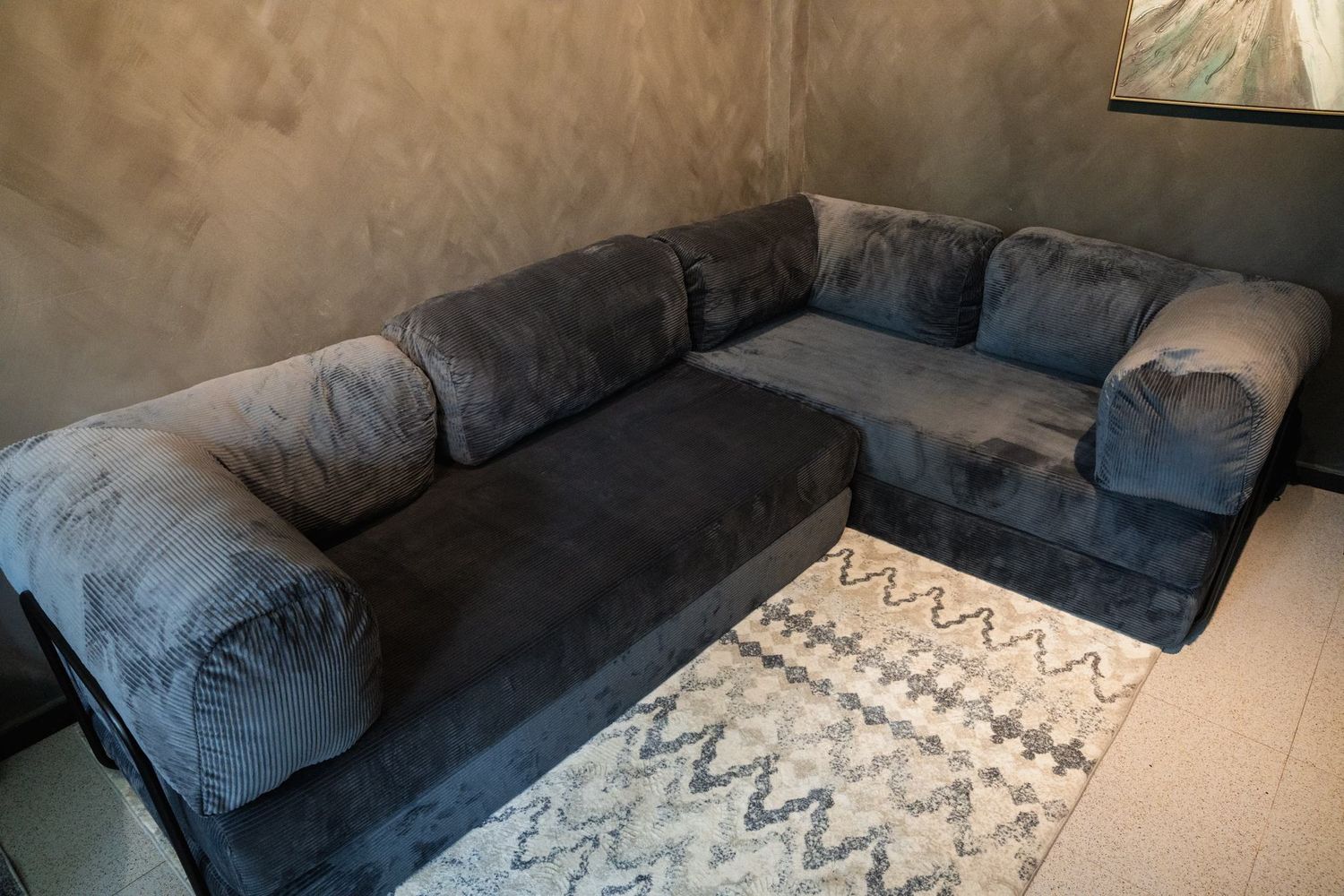
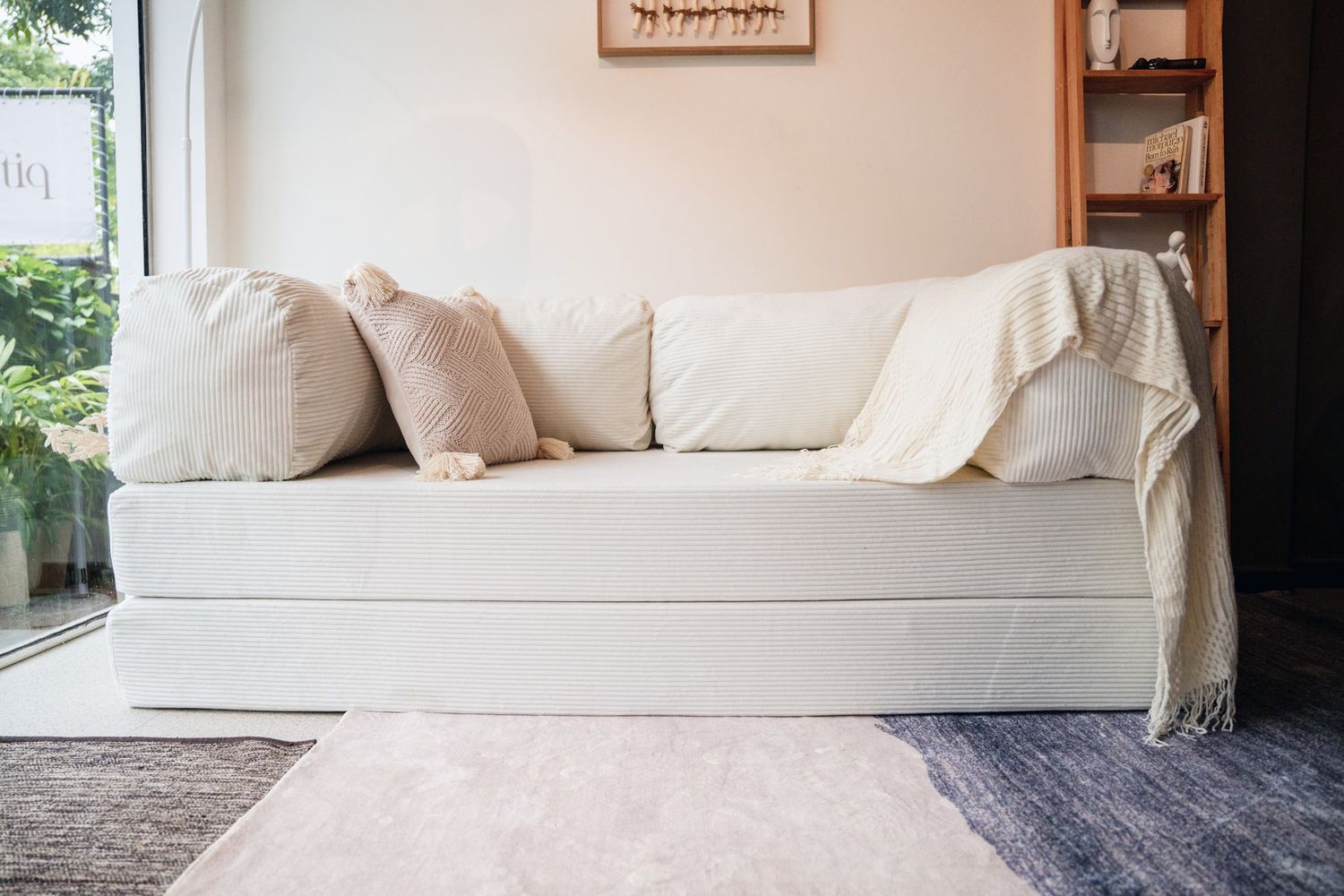

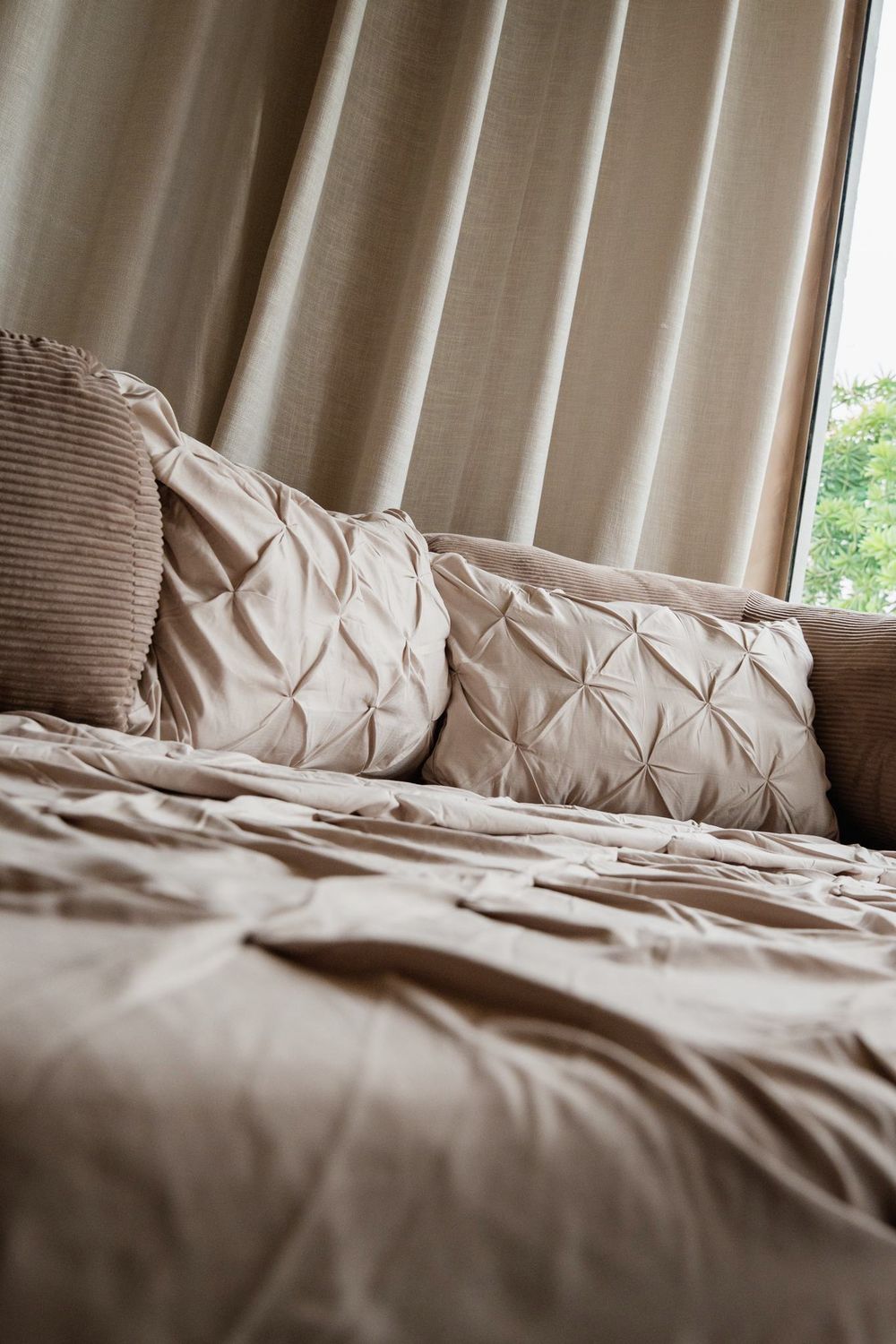
Image 1 of 4
The Cloud Collection
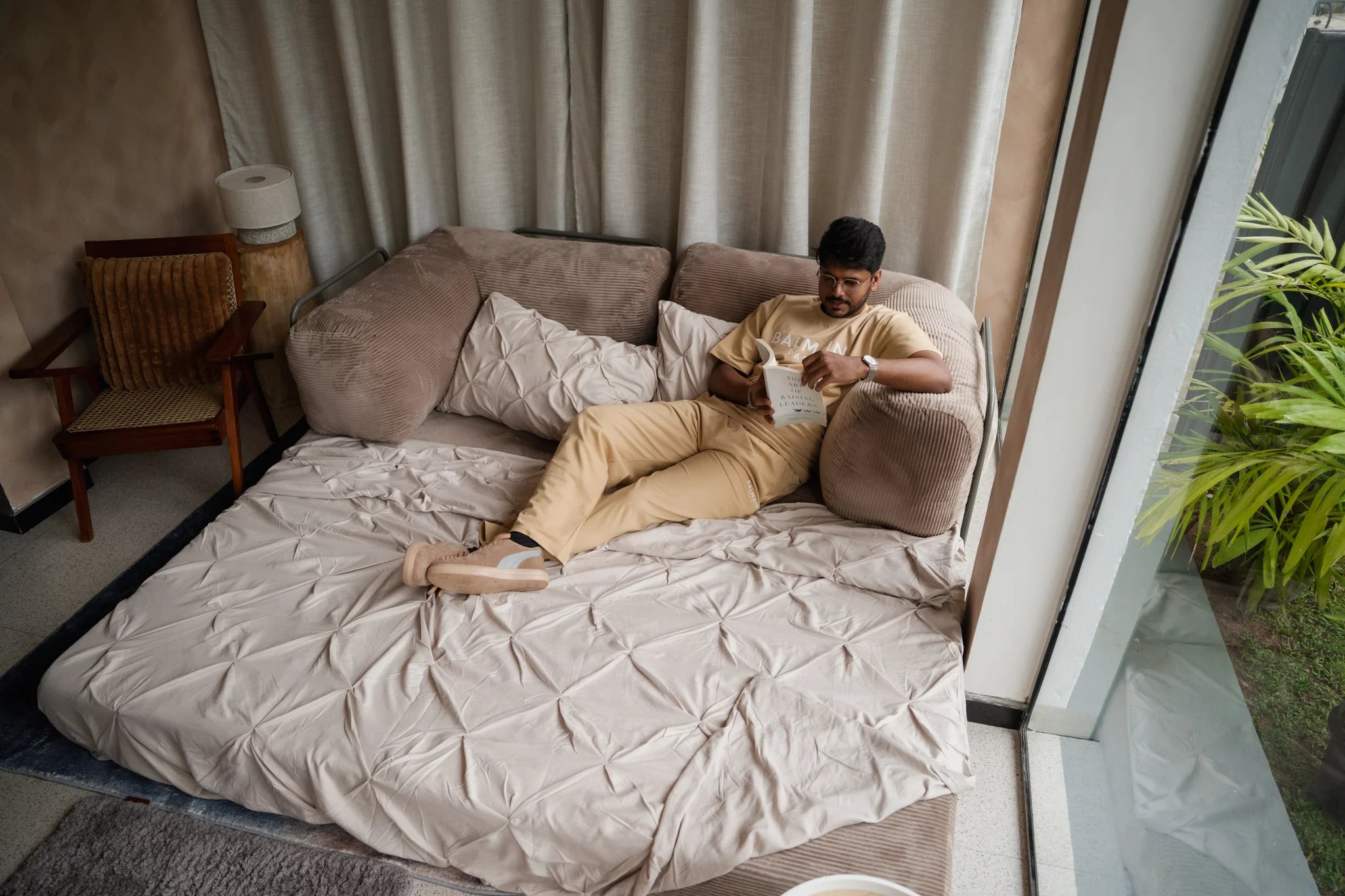
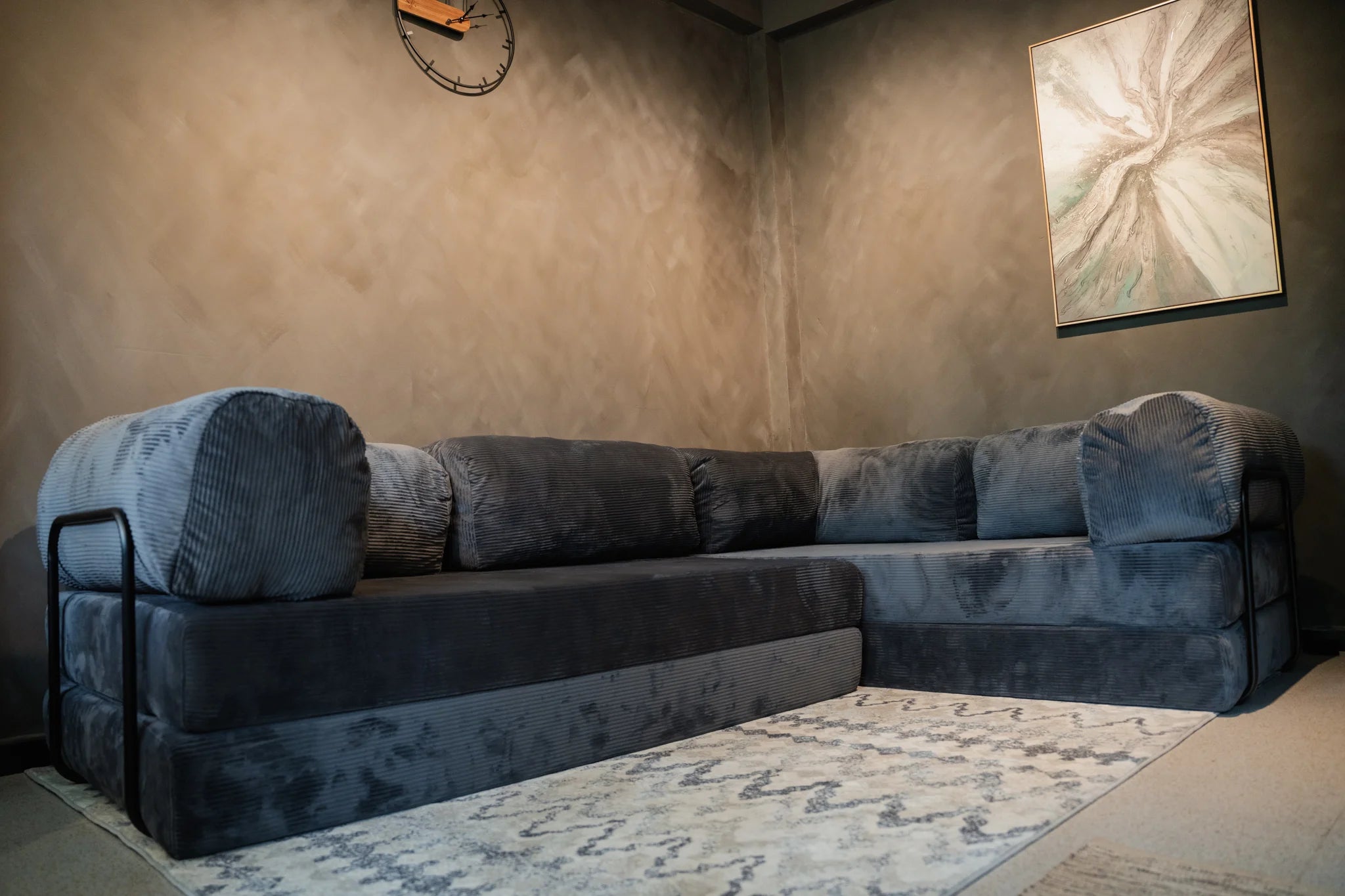
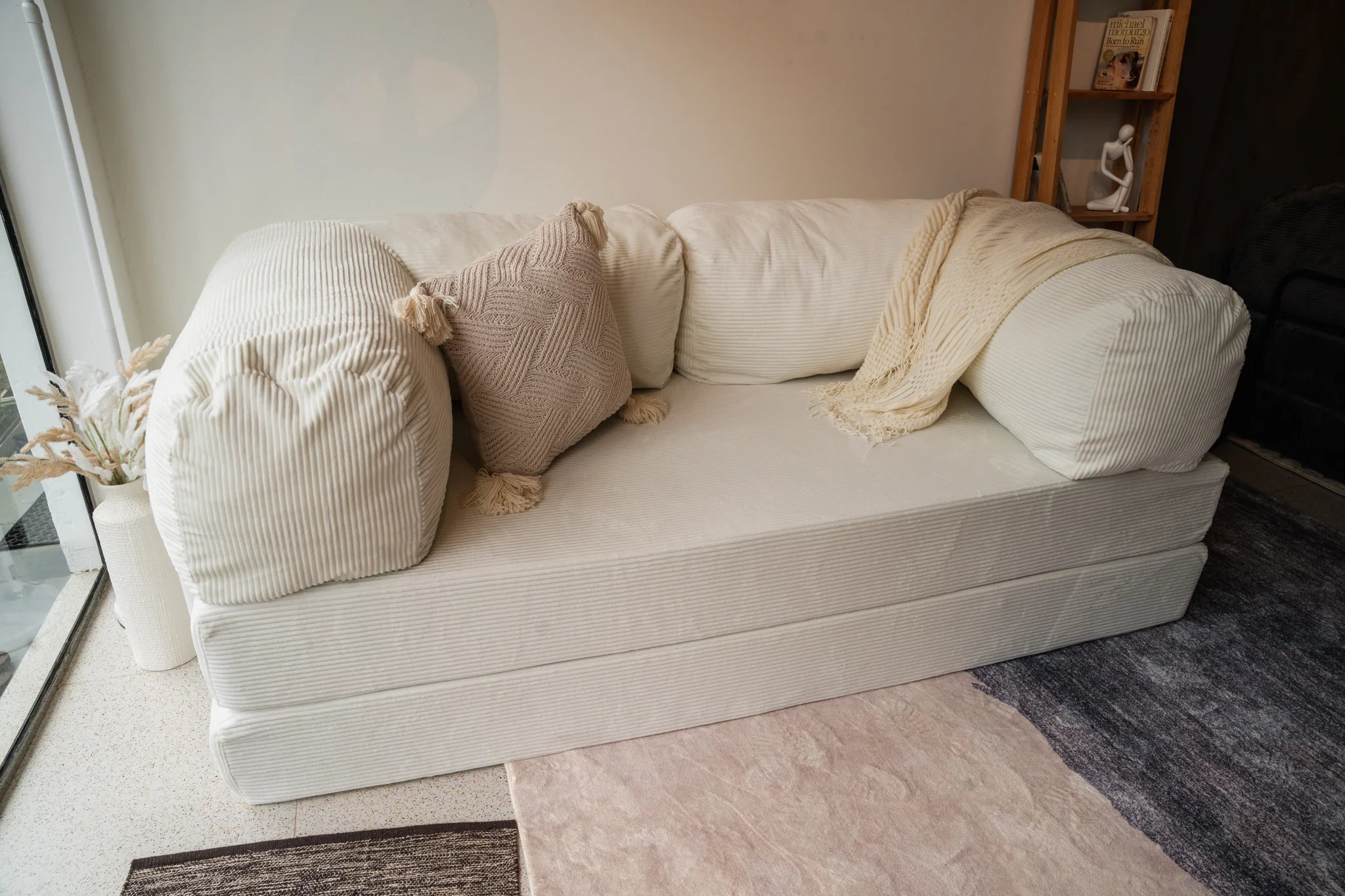
Frameless forms, dedicated entirely to soft living. Each one moves with you, from a quiet reading corner to a sprawling lounge.

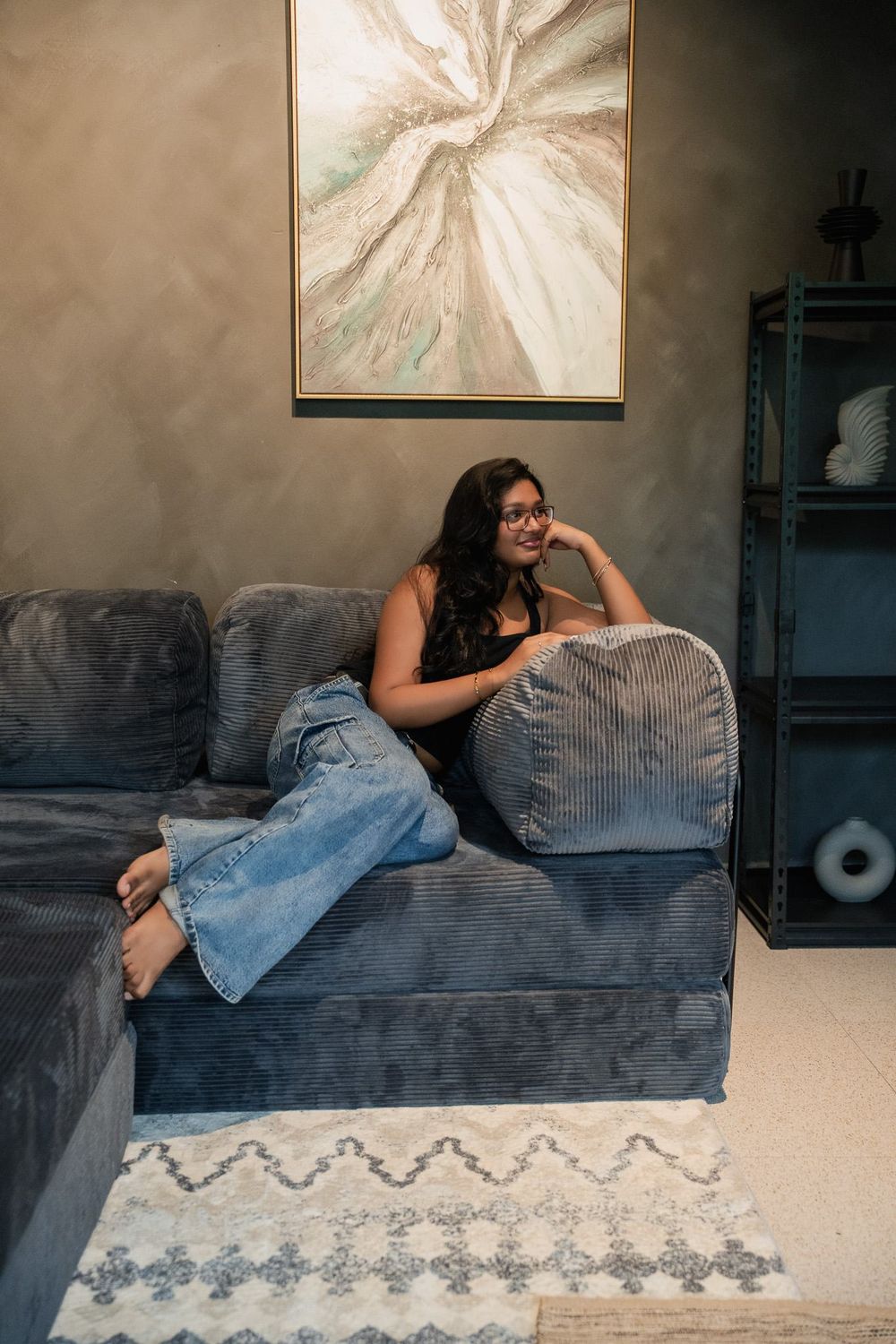

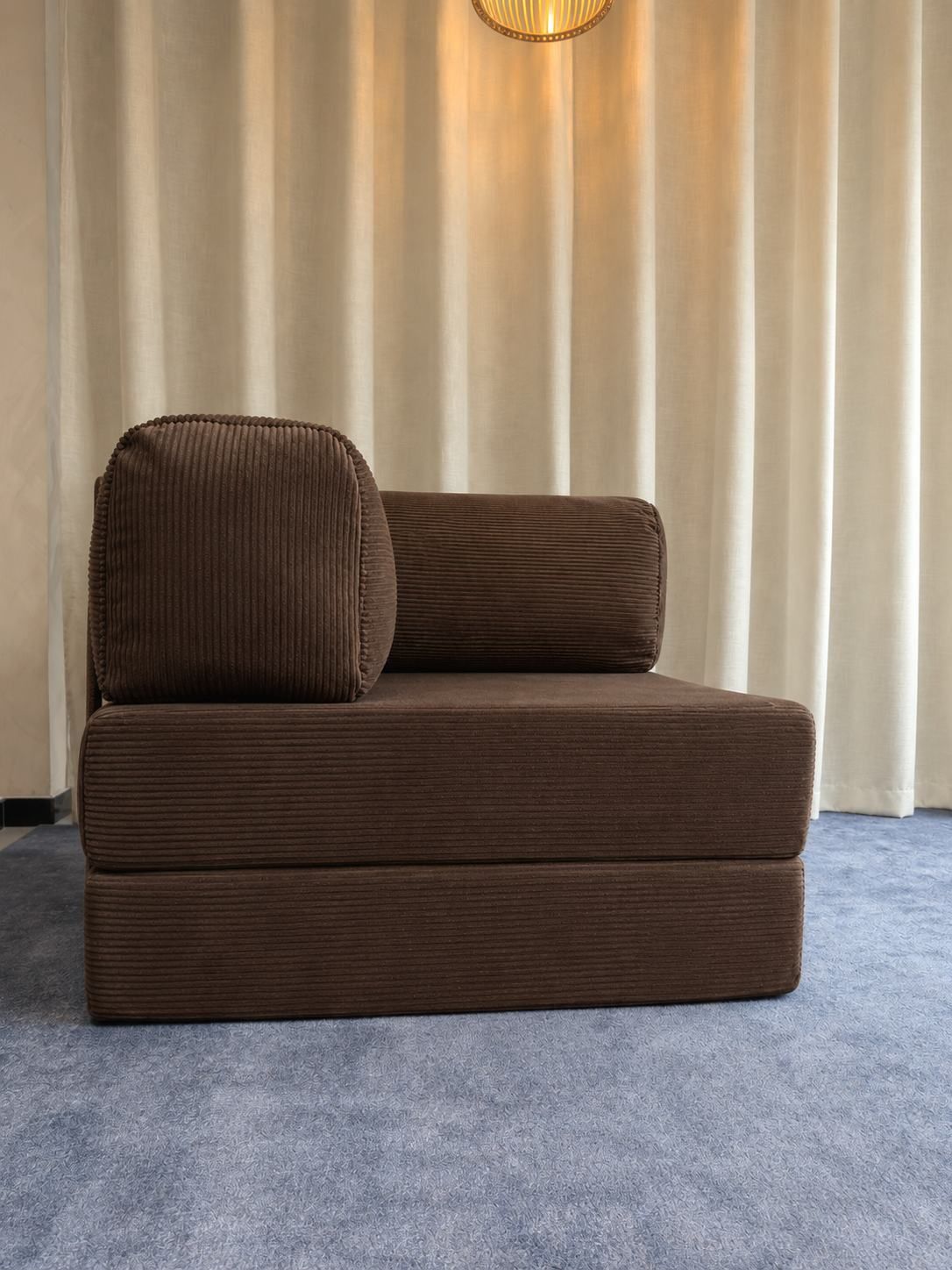
Frameless, explained.
What a boneless, modular sofa actually is — and what to ask before you buy one from anybody.
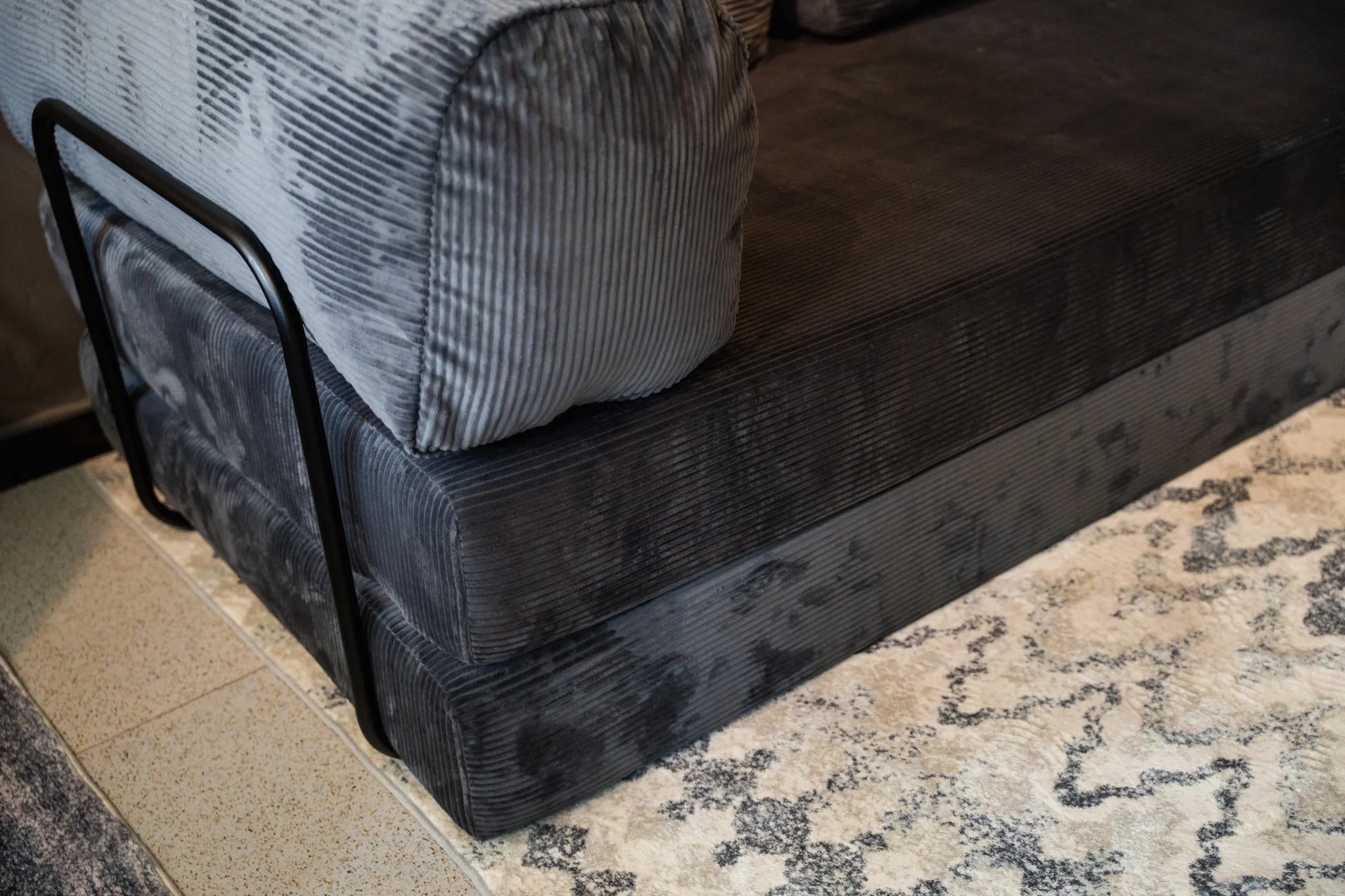
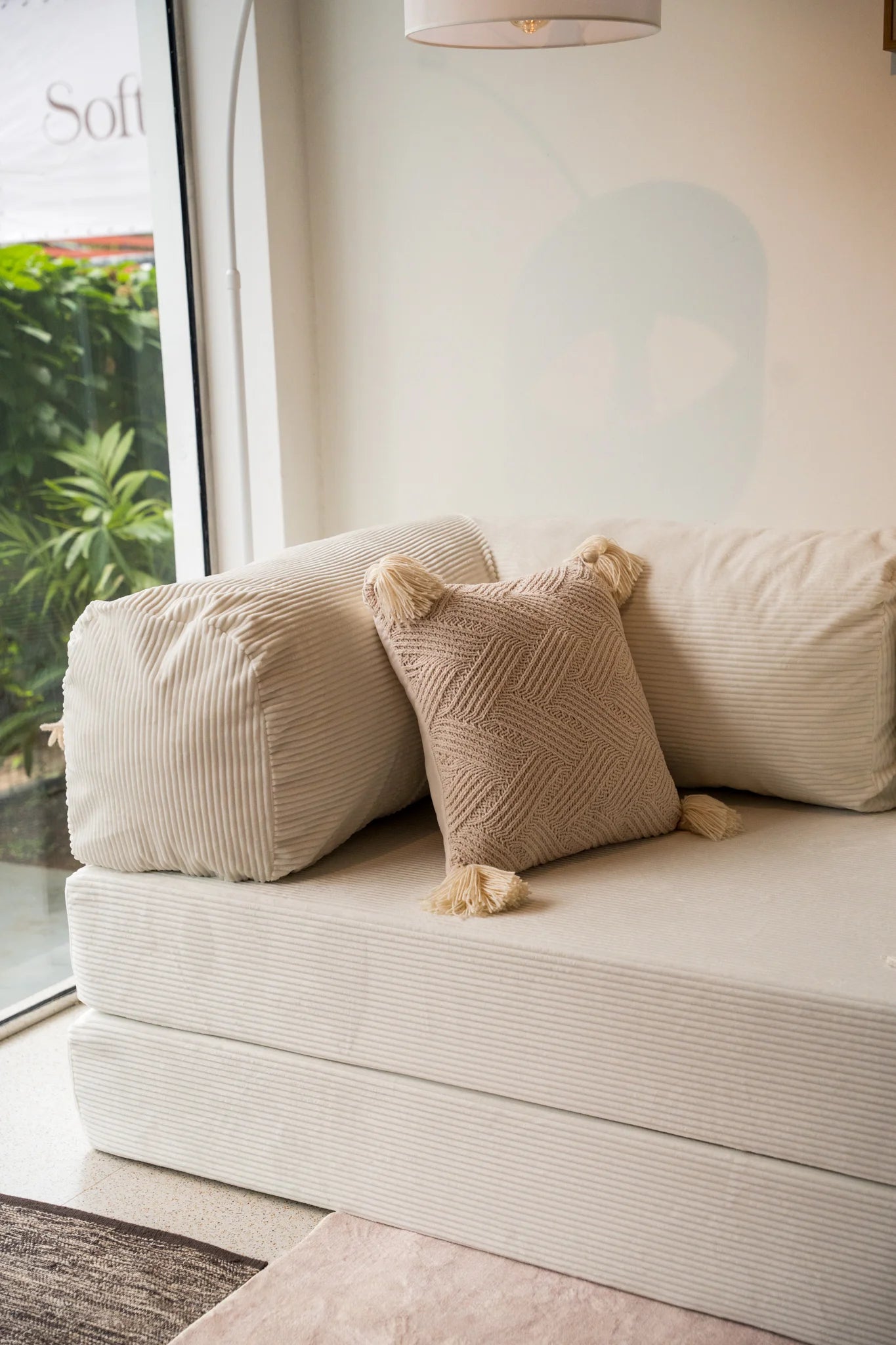
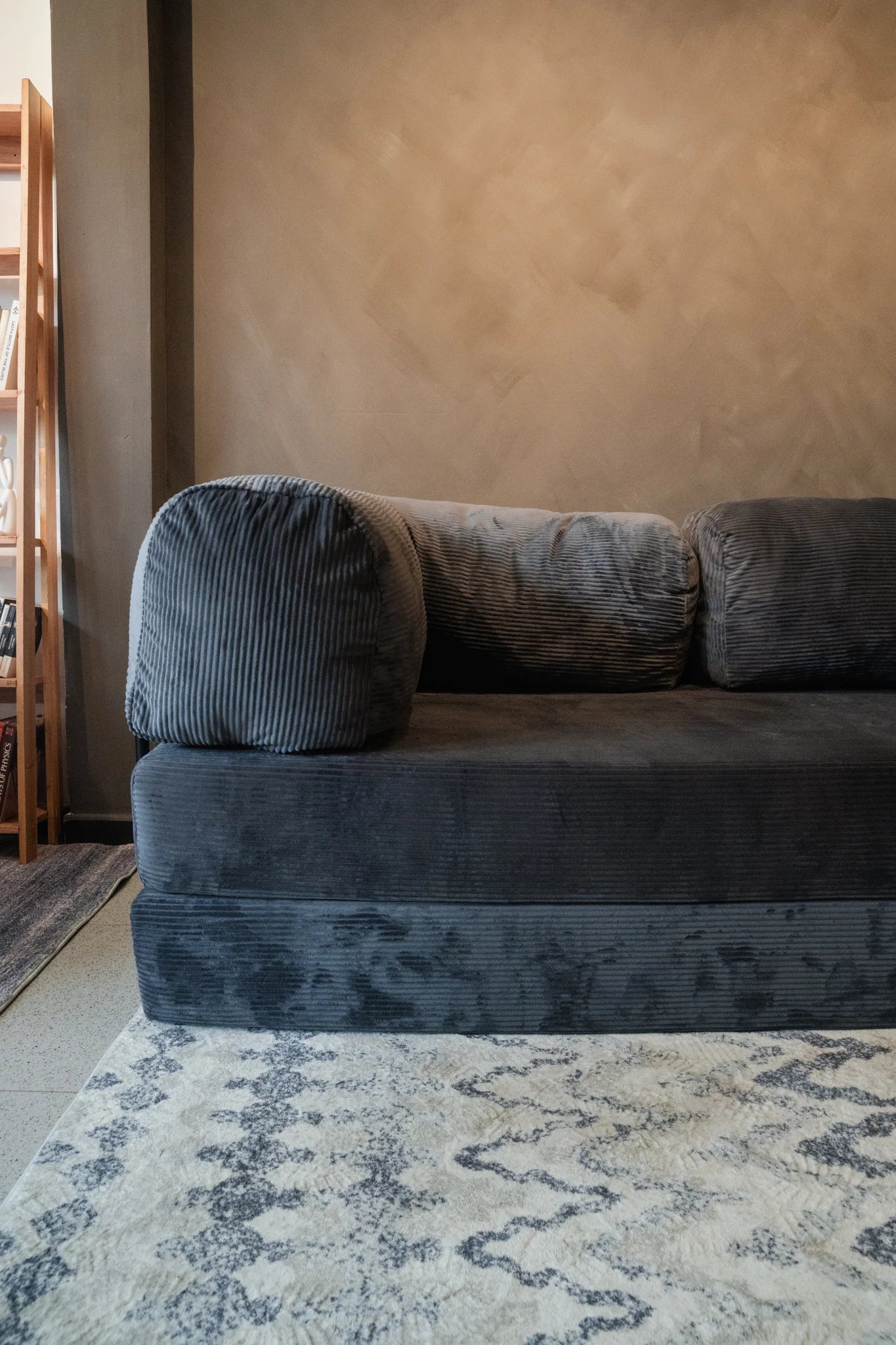
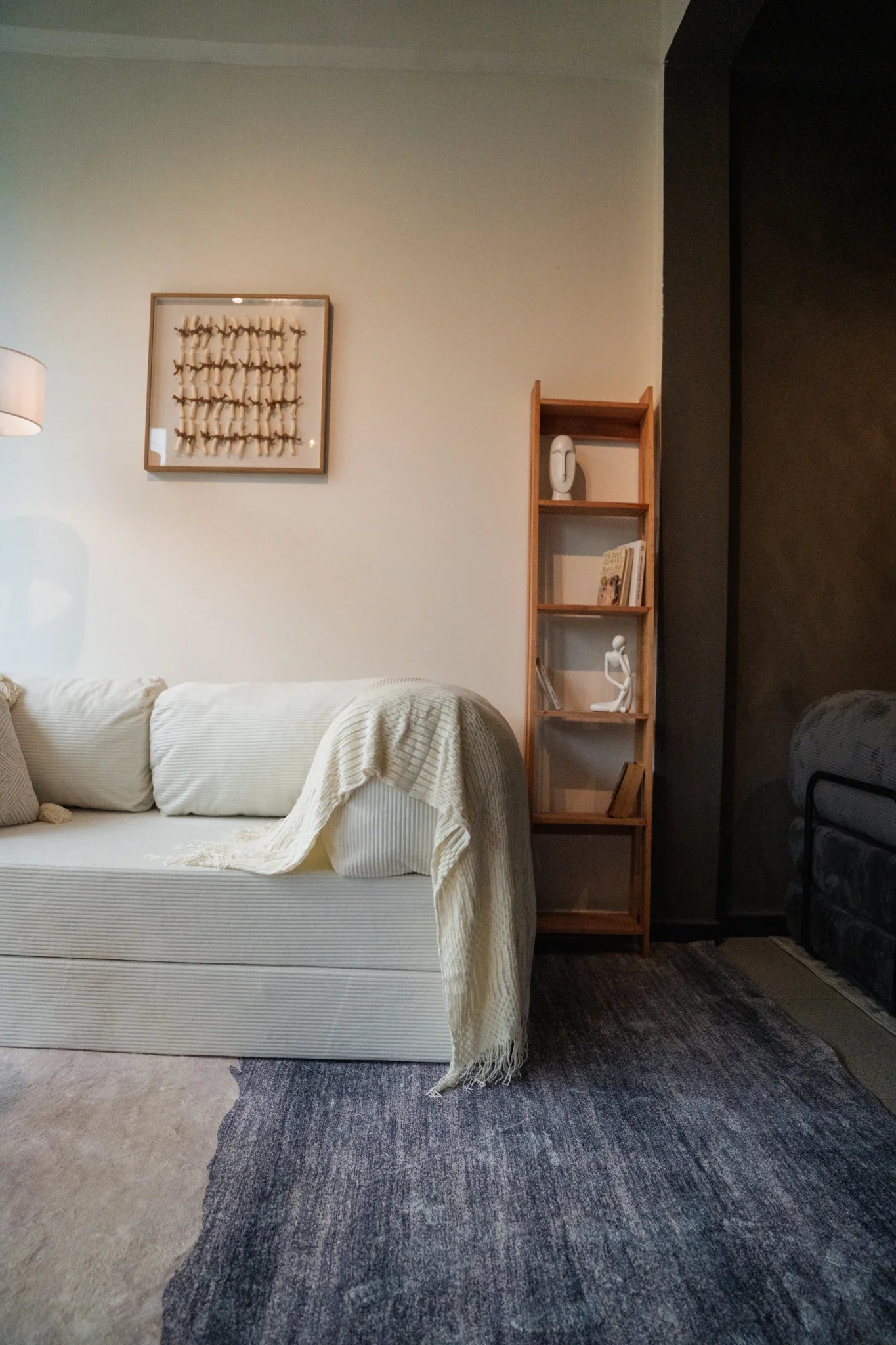
A conventional sofa is built around a rigid internal skeleton, usually timber, and the padding is wrapped around it. A boneless sofa has no such skeleton. High-resilience foam is shaped into the structure itself, so the form gives where you sit and holds where you lean.
The practical difference is that you sink into it rather than onto it, and there is no hard edge anywhere to find with an elbow or a knee.
That depends entirely on the foam. Low-density foam compresses permanently and a frameless piece made from it will flatten within a year, which is where the category earns its poor reputation.
High-resilience foam behaves differently: it is engineered to recover its volume after compression. Ours carries a 5–7 year guarantee on the foam specifically — longer than the guarantee on the piece as a whole, because the foam is the structure.
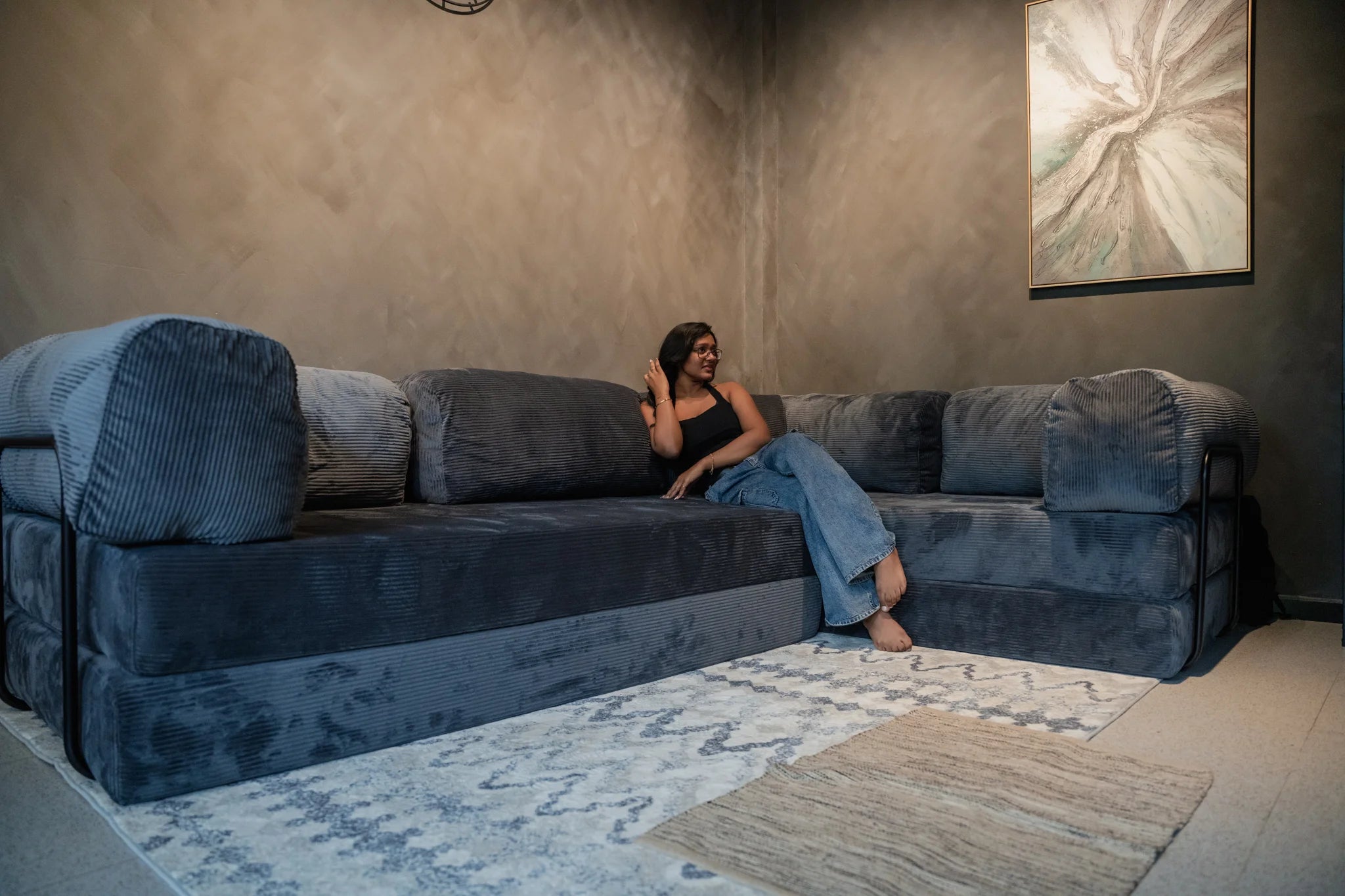
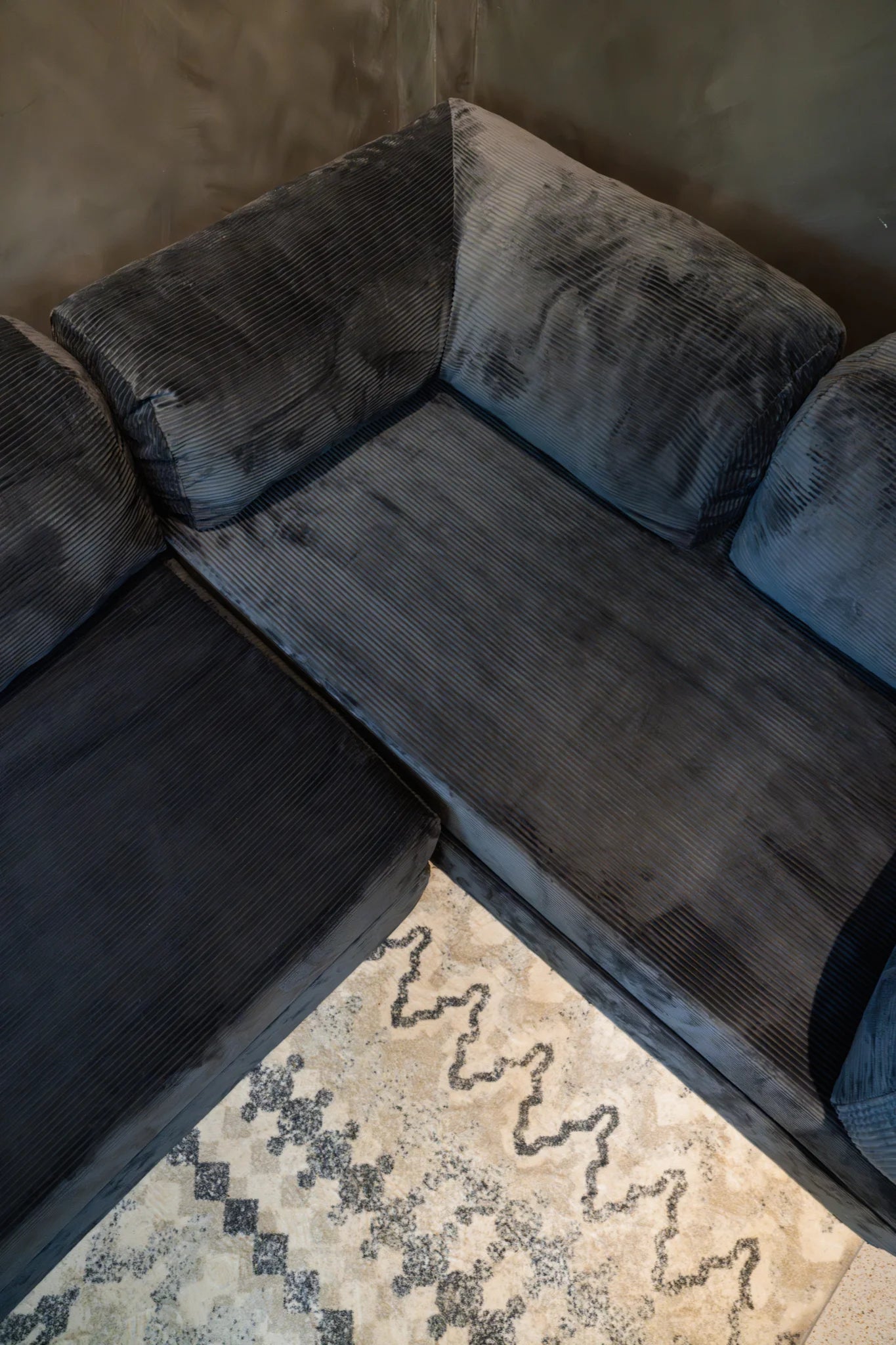
The piece separates into sections that work on their own. A large sectional can become two seats and a chair; a run along one wall can turn a corner instead.
It matters most when you move. A conventional sofa either fits the new room or does not, and it either gets through the door or does not. A modular one is carried in pieces and re-formed to whatever the new space allows.
Both, but be honest with yourself about which you want. A foam-dominant sofa is deliberately deep and soft — it is built for lounging, and that is what it does best.
If you want a firm, upright seat for formal dining-height conversation, a framed sofa with tight cushions will serve you better. This is the wrong purchase to make against the wrong expectation, which is why we would rather you sat on one first.
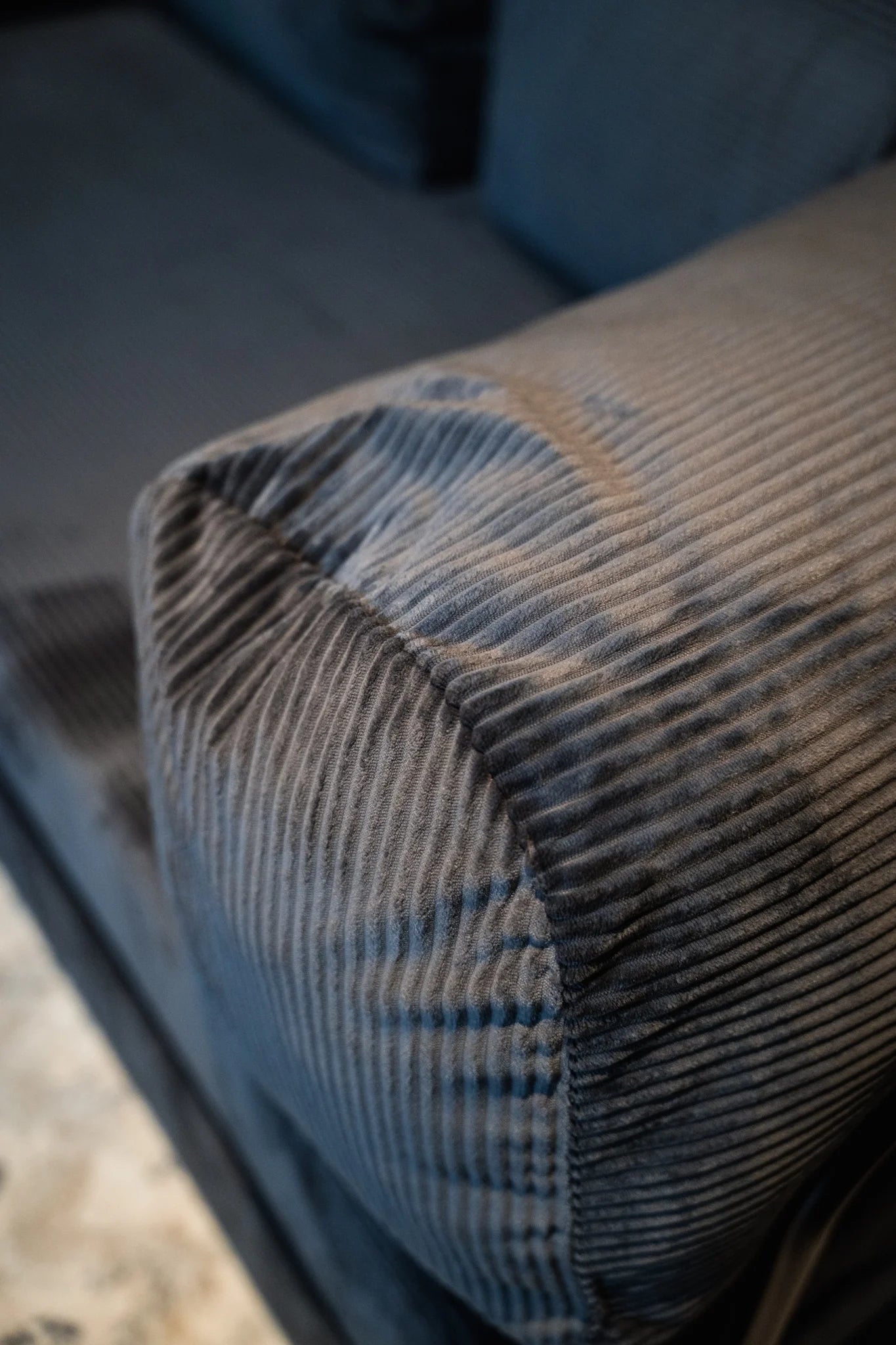
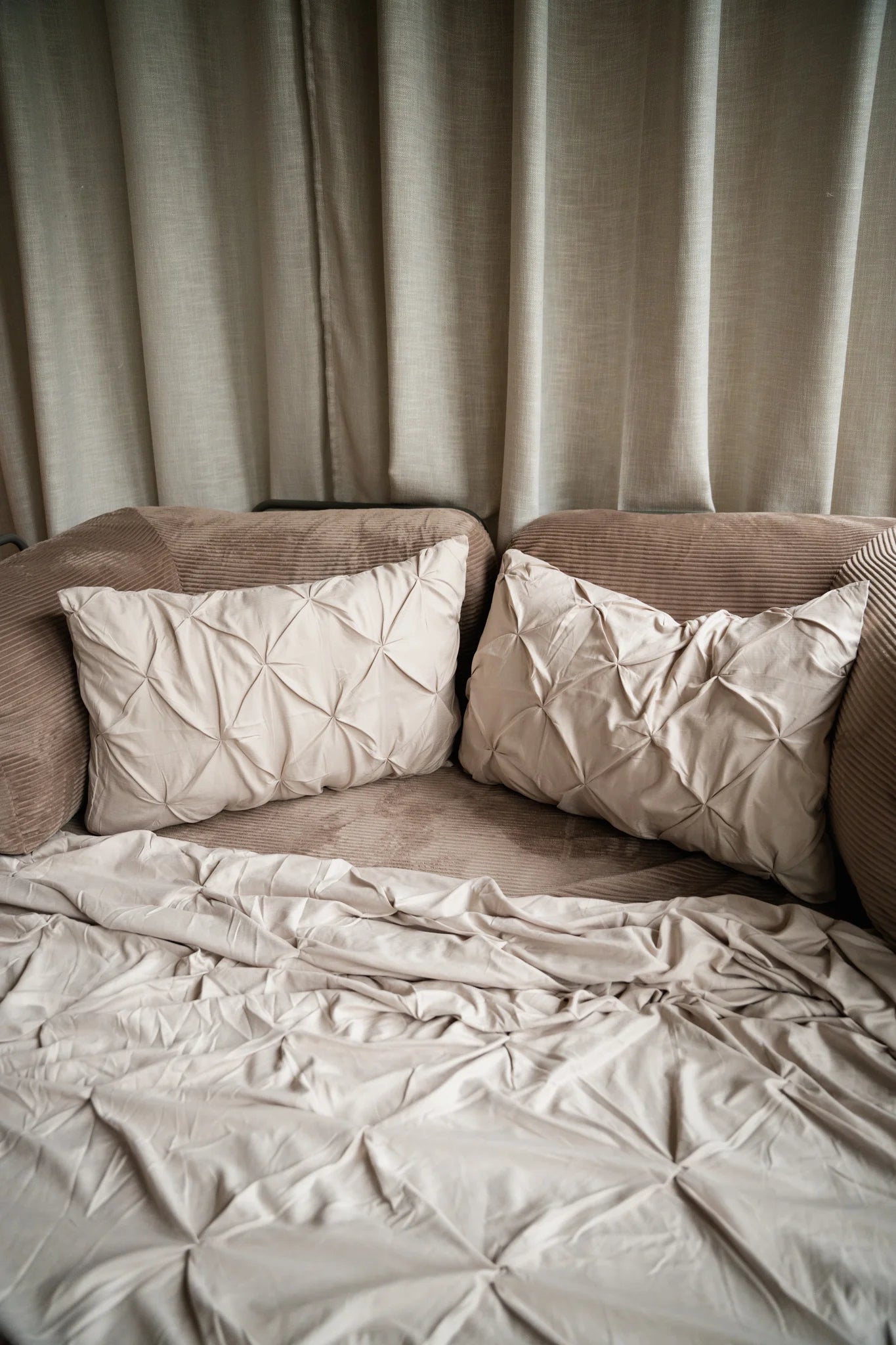
Every cover lifts away completely and goes into a domestic washing machine — not a specialist cleaner, and not a damp cloth and hope.
The underside is sealed with a waterproof layer, so a spill that gets past the cover wipes off the base rather than soaking into the foam. That is the part most sofas get wrong, and it is the reason liquid damage usually ends a sofa’s life.
It changes how a room reads: without a visible gap of floor beneath it, a low piece makes a room feel larger and calmer than a sofa raised on legs.
The two usual concerns are damp and cleaning. The sealed waterproof base answers the first. For the second, the piece is light enough to move aside — there is no heavy hardwood frame to wrestle with.
It has to be built for one, and most imported foam furniture is not. Humidity is the reason the sealed base and the fully washable cover exist rather than being upgrades.
Ours are made in Sri Lanka, so they are designed against the climate they are sold into rather than adapted to it afterwards.
Because nothing is guessed. The cover and the frame finish are chosen before anything is cut, so you are not settling for the colour that happened to be in a warehouse.
It is also why we do not take returns: each piece is made for one order and cannot go back on a shelf. We would rather you visited the showroom and sat on one than found out afterwards.
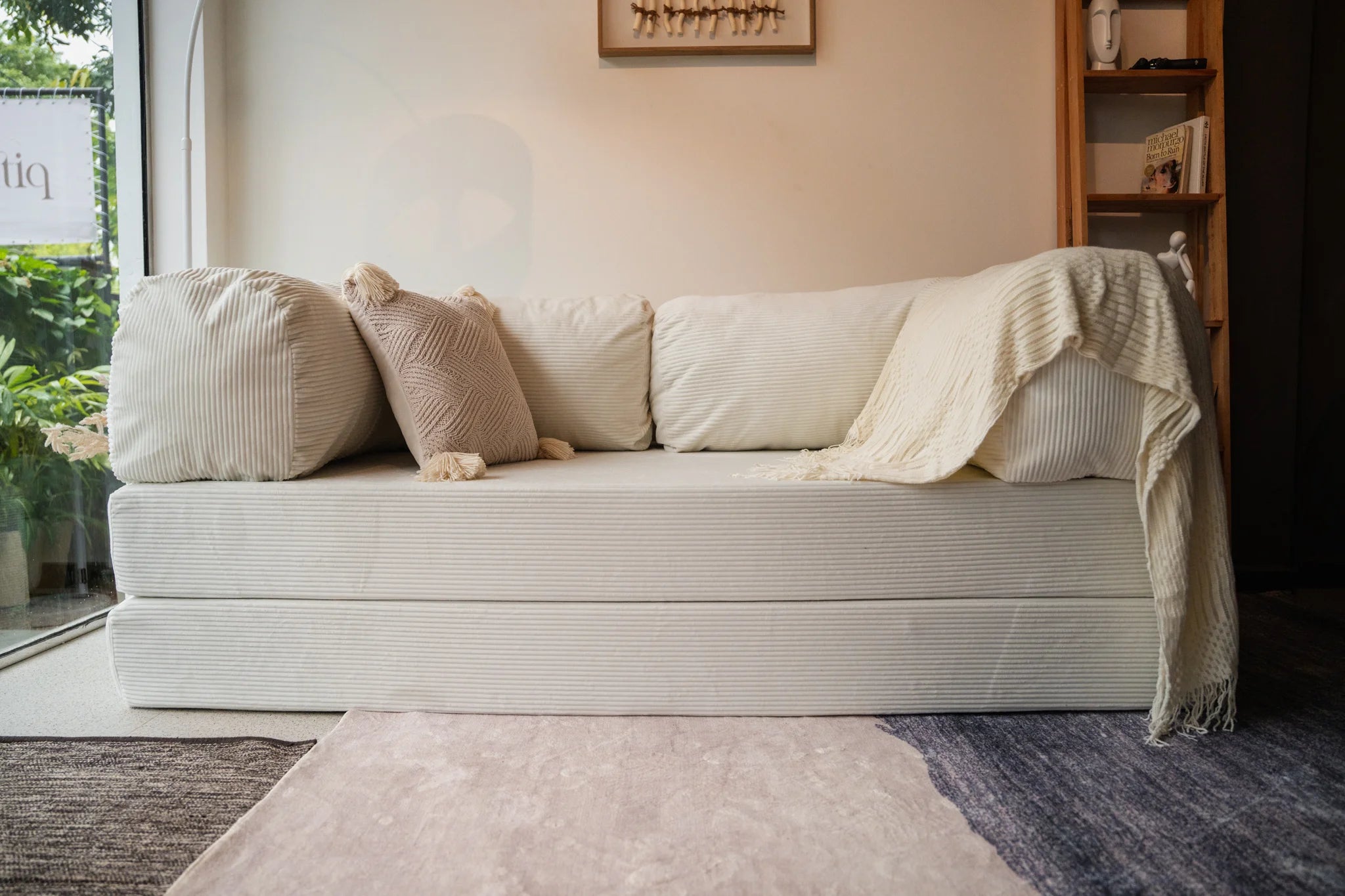
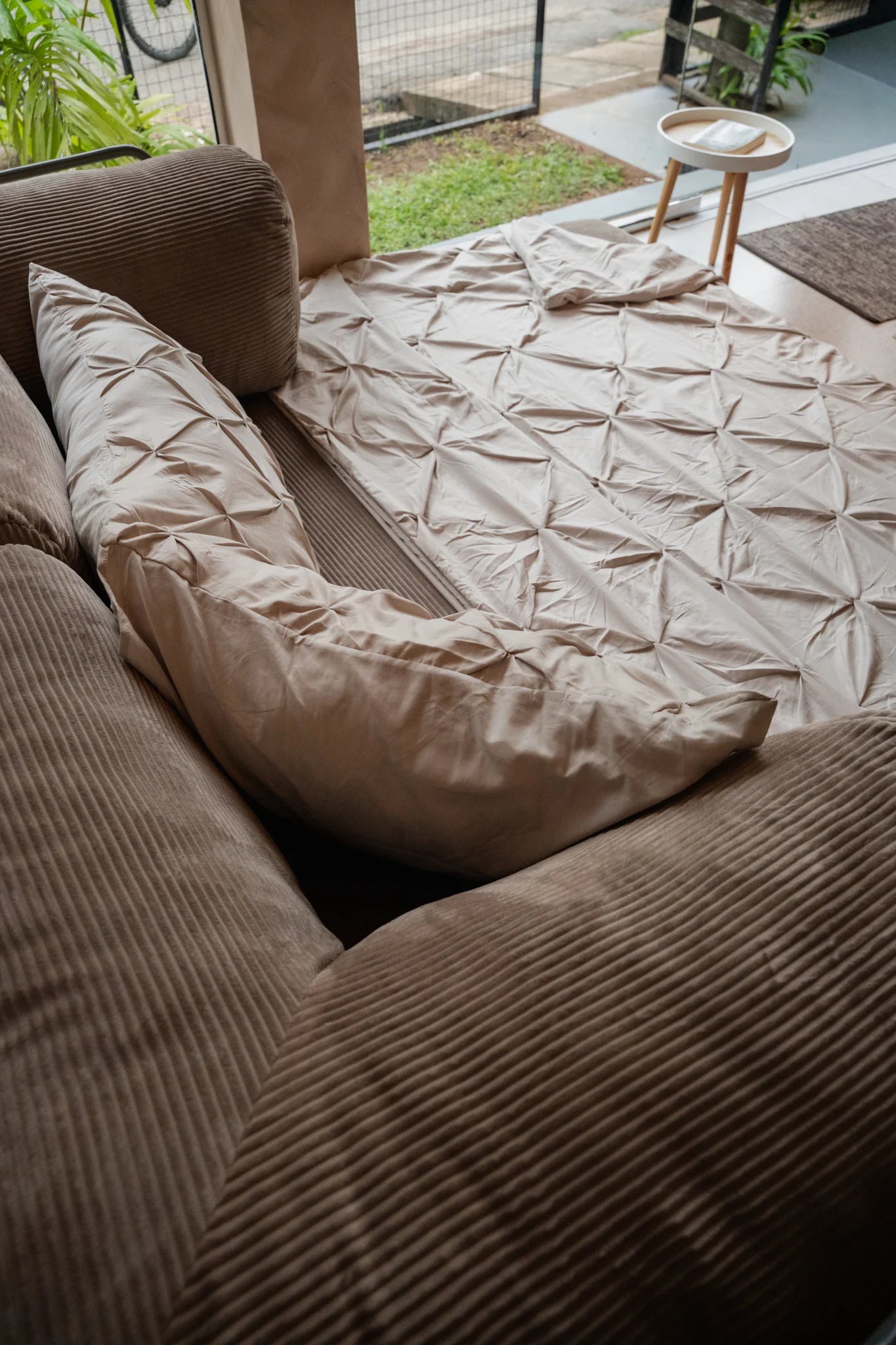


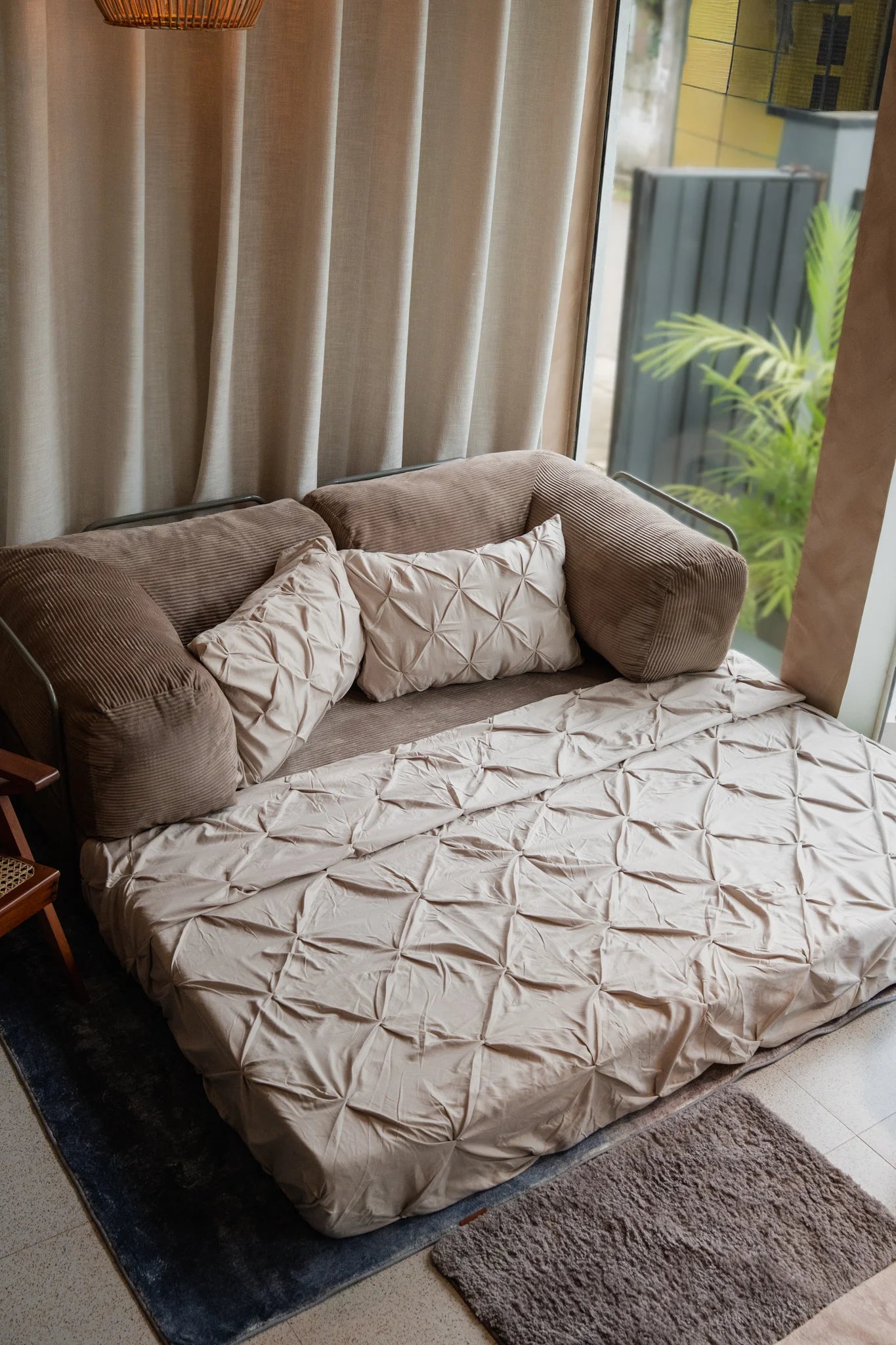










Sit on every piece.
149-A, Thelawala, Mount Lavinia, Sri Lanka